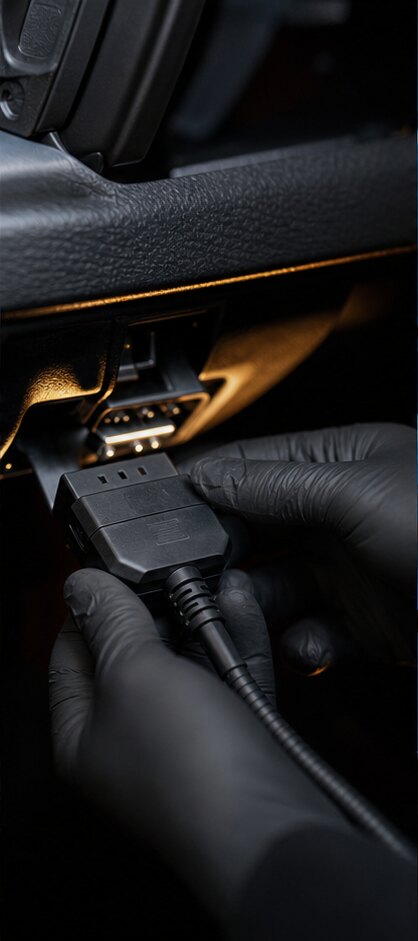
A draft technical note for the workshop conversation. The right route always starts with the exact vehicle and its current condition.
01
Fault context is not noise
Relevant stored faults, recurring warning lights and recent repairs give useful context. The purpose is not to diagnose every possibility remotely; it is to understand what needs attention before a route is considered.
A clean request explains what the vehicle does, when it happens and what has already been checked. That is more useful than a long list of unrelated codes.
02
Baseline behaviour is part of the picture
Power and torque figures are only one part of the baseline. Throttle response, hesitation, temperature behaviour and transmission response can also shape the technical discussion.
When this context arrives with the exact engine configuration, the conversation can move from generic assumptions to the vehicle in front of you.
03
Keep the handoff structured
The strongest remote workflow keeps vehicle data, observed behaviour and the requested route together. It gives both the workshop and vehicle owner a clearer next step.